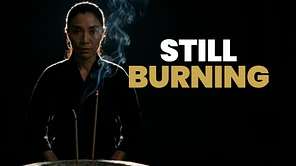
Stop Chanting From Your Throat: The Science of the Lion's Roar
You sit down to chant and hope for a miracle. You want to feel lighter, stronger, and clearer. After twenty minutes, the heavy feeling in your chest is still there. The words feel like empty sounds. You might blame your faith and think, "Maybe I'm not dedicated enough."
Your faith is not the problem. Your engine is broken.
Most practitioners unknowingly chant from their throat. This creates a "beggar's whine." This vibration of lack and fear gets stuck in the neck. To unlock the true power of Nam Myoho Renge Kyo, you must shift from the beggar's whine to the Lion's Roar.
What is the Difference Between Throat Chanting and the Lion's Roar?
Throat Chanting is a superficial vocal technique where the vibration remains trapped in the vocal cords and neck. This frequency often signals panic or distress to the body. It keeps the practitioner in a "High Beta" brainwave state associated with fight-or-flight responses.
In contrast, the Lion's Roar is the traditional method of chanting in Independent Nichiren Buddhism. It is a deep, diaphragmatic sound that resonates in the chest and skull. This vibration stimulates the vagus nerve. It shifts the body into a parasympathetic "rest and digest" state. This allows for deep mental clarity and spiritual confidence.
The Biology of the Mystic Law
Nichiren Daishonin taught that "The voice does the Buddha's work." Modern science confirms that the quality of that voice changes your biology.
When you chant from the throat, you bypass the body's most powerful tool. This is the Vagus Nerve. This nerve runs from your brain, down your neck, and into your gut. It is the control center for your emotions.
-
The Sphenoid Bone Connection: Deep chanting vibrates the sphenoid bone. This is a butterfly-shaped bone sitting behind your eyes.
-
The Pituitary Gland: This vibration wakes up the pituitary gland. This is the master gland that regulates your body's chemistry.
-
The Result: When you hit the right resonance (the Lion's Roar), you physically shut off the "worry center" of the brain. You stop signaling "danger" to the universe and start signaling "power."
The Physical Practice of the Lion's Roar
To break the cycle of the beggar's whine, one must reconstruct the physical act of prayer. It is not enough to simply wish for a better sound. The body must be aligned. The breath must be deepened. The vibration must be moved from the throat to the hara (belly).
Nichiren Daishonin emphasized that the "body and mind are not two." If the body is collapsed and the voice is thin, the mind cannot manifest the life condition of a Buddha. The Lion's Roar requires a specific physiological approach involving the spine, the "pulling breath," and the placement of the sound.
We have compiled the exact physical protocol. It covers posture, breathing techniques, and vocal resonance in a dedicated guide for the independent practitioner.
Read the Full Guide: How to Chant Nam Myoho Renge Kyo Correctly
Independence Requires Strength
Institutions often encourage a dependent mindset. This can lead to the "beggar's whine" where one pleads for help from outside. Independent Nichiren Buddhism teaches that you are the temple. Your voice is the mechanism that changes your reality.
When you master the Lion's Roar, you stop asking for permission. You start commanding your life.
Further Study for the Independent Practitioner
-
Watch more videos: on our YouTube channel.
-
Deepen Your Practice: Download our [Independent Gongyo Book PDF] to follow the traditional format without sectarian changes.
-
Join the Community: Experience the Lion's Roar with our global community of independent practitioners. [Join the Sangha]