
There is a form of pain that does not announce itself loudly. It lives in the house where you grew up. It sits across the table. It speaks using your name.
When slander moves between people who share blood, it carries a particular weight. Words said in the morning can follow a person until nightfall. The family home, which should be a place of rest, becomes a place that requires constant vigilance. This is not a small thing. Nichiren Daishonin taught his followers to name their obstacles clearly, because naming them is the beginning of understanding them.
The name for what arises here is go-sho. It is one of the three obstacles described in the Maka Shikan and cited throughout Nichiren Daishonin's writings. Go-sho is the obstacle that comes specifically from within the intimate circle, from a spouse, from children, from those who are nearest. The Gohonzon commentary notes that this obstacle is interpreted broadly as opposition from one's own family members. It is not an accident. As Nichiren Daishonin wrote, citing the Great Teacher T'ien-t'ai: "As practice progresses and understanding grows, the three obstacles and four devils emerge, vying with one another to interfere." This is the confirmation that the practice is real. Were it not real, nothing would stir.
"内憂外患" (Naiyu gaikan — trouble within, danger without)
This saying describes a state in which conflict is present on every side. It applies here precisely. The teaching does not tell a practitioner to eliminate conflict before it can proceed. It tells the practitioner to proceed through the conflict. That is the position of go-sho: it appears on the path, not before it.

Consider a woman in her late twenties who had practiced for several years. She continued chanting every morning in her room while her parents argued in the corridor outside the closed door. She chanted every evening while the house held its tension like weather. She did not argue back. She did not stop chanting. After two years, her relationship with her mother changed. Not because her mother changed first. Because she had built something inside herself that could hold steady. The environment shifted because her inner life-condition shifted. This is the doctrine of esho funi, the non-separation of self and environment, and it operates whether or not anyone in the house understands it.
THE PEACE SOUGHT IS NOT THE SILENCE OF THE HOUSE. IT IS THE SILENCE INSIDE THE PRACTITIONER THAT THE HOUSE CANNOT REACH.
This is the teaching. It is not an instruction to tolerate harm without limit, and it is not a demand to stay in circumstances that damage life. It is a statement about where the work happens first. The chanting of Namu Myoho Renge Kyo today plants a cause with the full weight of Myoho Renge Kyo behind it. That cause belongs entirely to the practitioner. No family member can cancel it.

Here is how to move through this, step by step.
Step one. Establish morning daimoku before the house wakes up. Even five minutes. The day's first cause belongs to the Law, not to the friction waiting in the next room. This is not ritual. It is the placement of a cause before any other cause is placed.
Step two. When slander arrives, do not return it. Nichiren Daishonin stated that words of good advice often grate on the ears, and words spoken in anger plant causes in kind. Silence in the face of hostility is not weakness. It is the refusal to add fuel to a fire that will burn itself out.
Step three. Chant for the happiness of the people causing difficulty. Not because they deserve it. Because the act of doing so transforms the chanter's inner state, which in turn changes the quality of their presence in the house. The environment responds to this over time.
Step four. Separate the question of physical and emotional boundaries from the question of inner peace. A practitioner may need distance from certain people. That is a practical judgment. But inner peace is not contingent on what those people do or stop doing. It is built through practice, session by session, today.
Step five. Continue. The faith that holds like water, flowing without stopping, is the faith Nichiren Daishonin praised above all others. He wrote: "To have faith like water means to believe continuously without ever regressing." That kind of faith is built in ordinary days, in difficult houses, at tables where the atmosphere is wrong.
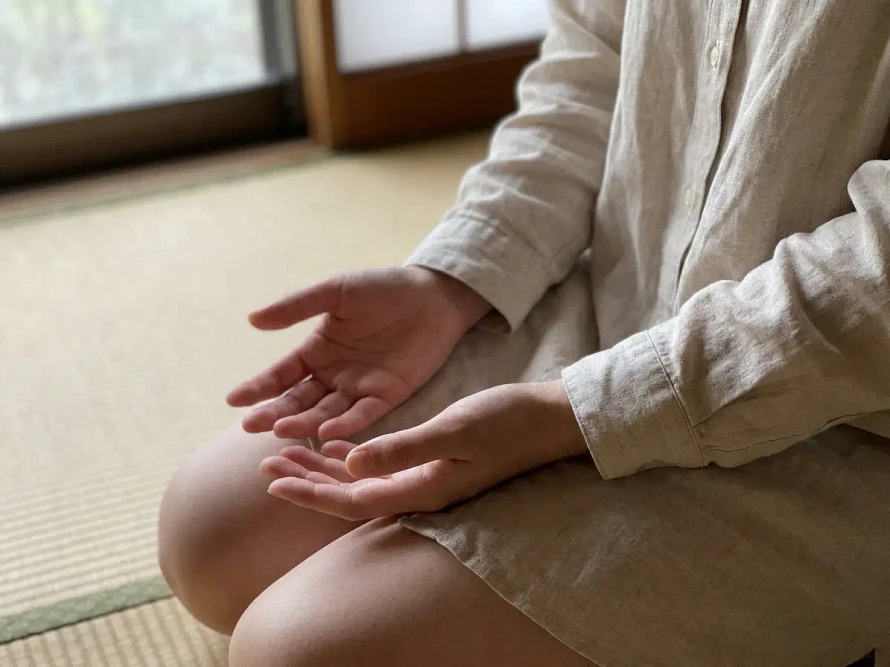
The peace that is wanted here is real and it is possible. It will not come because the family agrees, or stops, or understands. It will come because the practitioner builds a life-condition that the family's friction can no longer reach. That is the promise of the Law. It has held across eight hundred years and it holds now, in every ordinary house, in every difficult morning.
法の中に安らぎあり
Namu Myoho Renge Kyo